Let sleeping Ones lie
A single-player, fantasy, exploration game where players uncover the remains of a sunken city, its former inhabitants, and a recurring dream.
Project Details
Release Date: Fall 2018
Development Time: 13 weeks (1 semester)
Platform: PC
Engine: Unity
Behind the Design
Let sleeping Ones lie was developed as a class project that focused on level design and fantasy. Its atmosphere and core mechanics were inspired by the stories of H.P. Lovecraft, which had themes of absolute helplessness and inevitable doom, while the sunken city was inspired by the city of Manila, Philippines.
Roofs made of corrugated aluminum sheets
Tall, cramped streets
The end goal based on the Rizal Monument
Overview
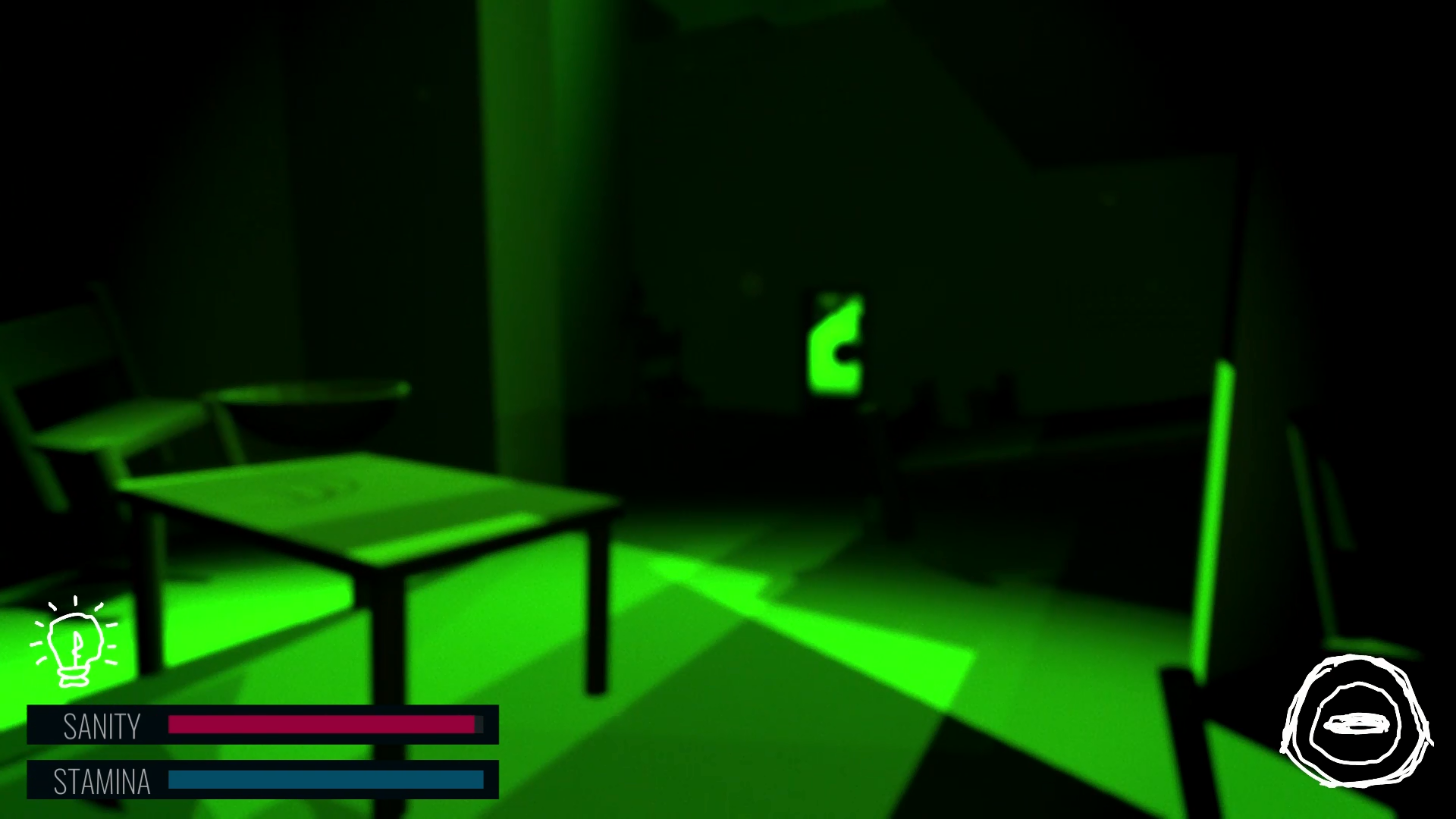
Throughout the level, players would find scorch marks on the walls to hint at what had happened to the previous inhabitants of the city. They served as small bits of exploration rewards for those curious enough to look around.
One of the most time-consuming parts of the project was modeling the assets using Maya. It was difficult to get used to the tools, especially before formally learning them in class. I also used Unity’s built-in modeling system, ProBuilder, for some of the simpler structures such as the red monument. Other packages used were Cinemachine for camera work and Post Processing for effects.
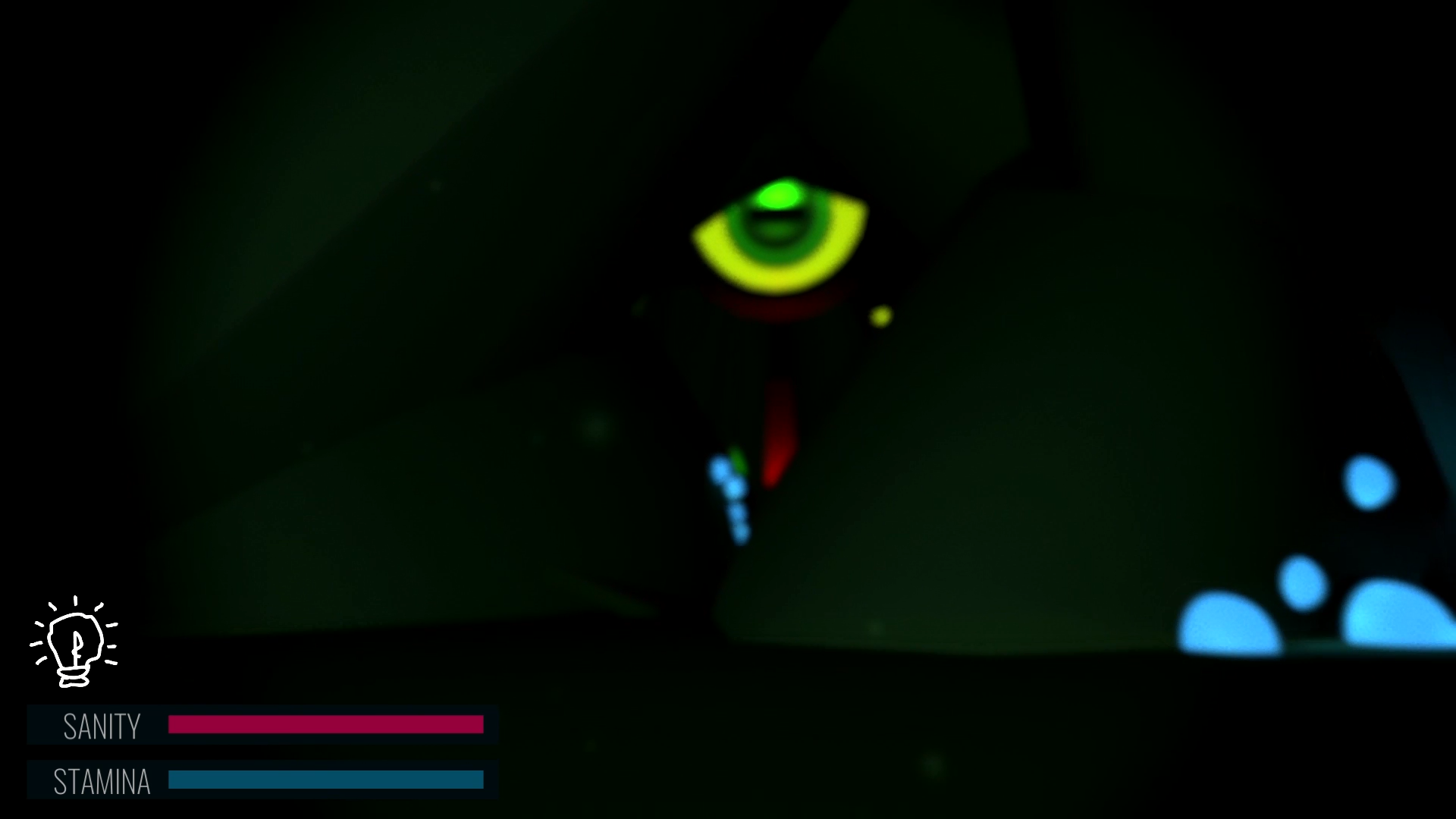
Another challenge I faced was scripting all the eyes to seem like they were searching for the player. Finding the balance between being smart enough to notice the player then slow down their search and allowing the player to find a path between searches took constant reiteration.
Level Design
How do you lead players without physically blocking their path?
I wanted to explore this idea to learn about player guidance using light and perspective. It also tied in nicely with the ominous theme. Some broad examples of these ideas can be seen in the way corners in the level are angled towards the goal while the red monument contrasts the enemy’s green light (despite the general associate of red = damage and green = health).
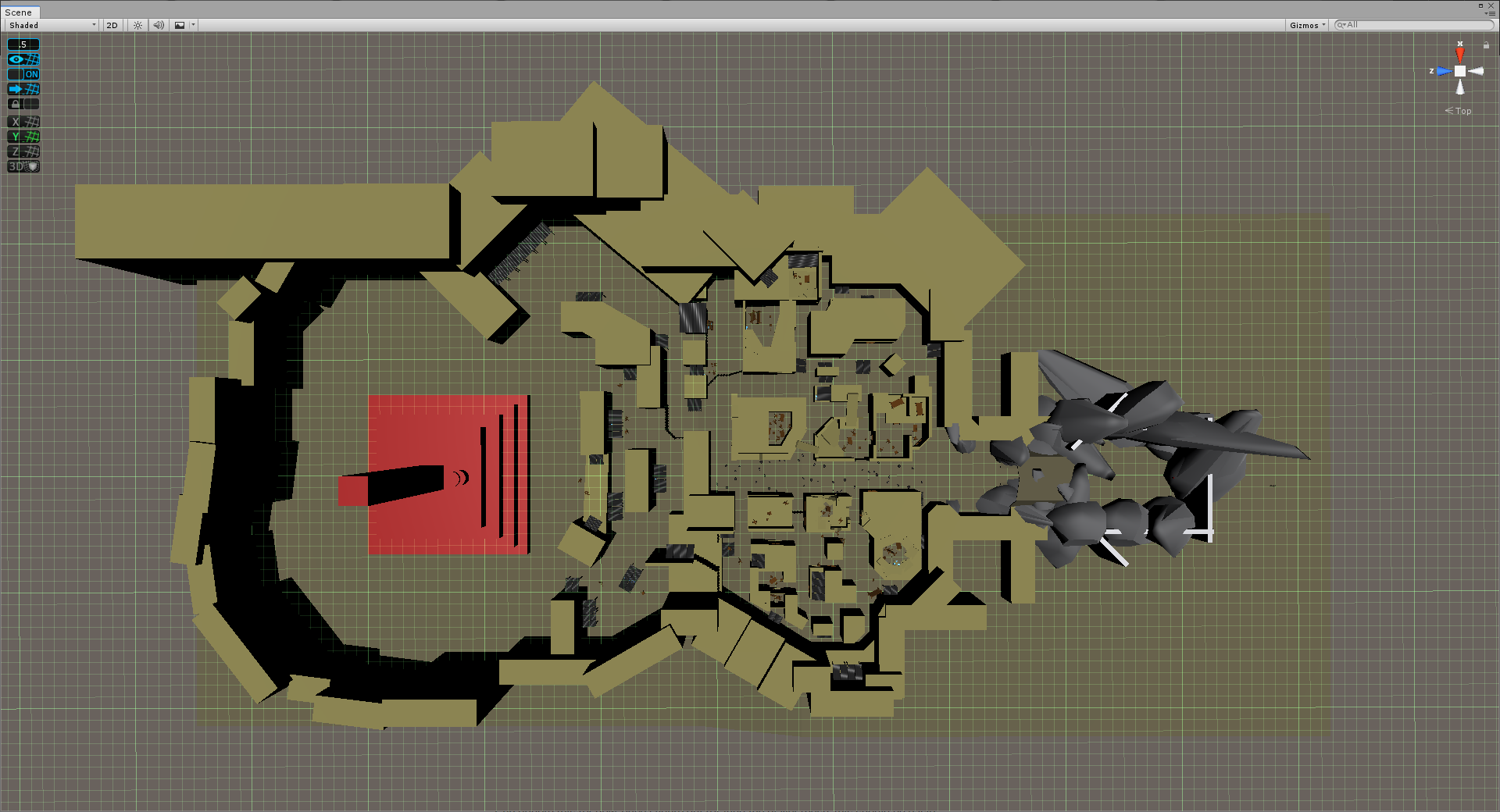
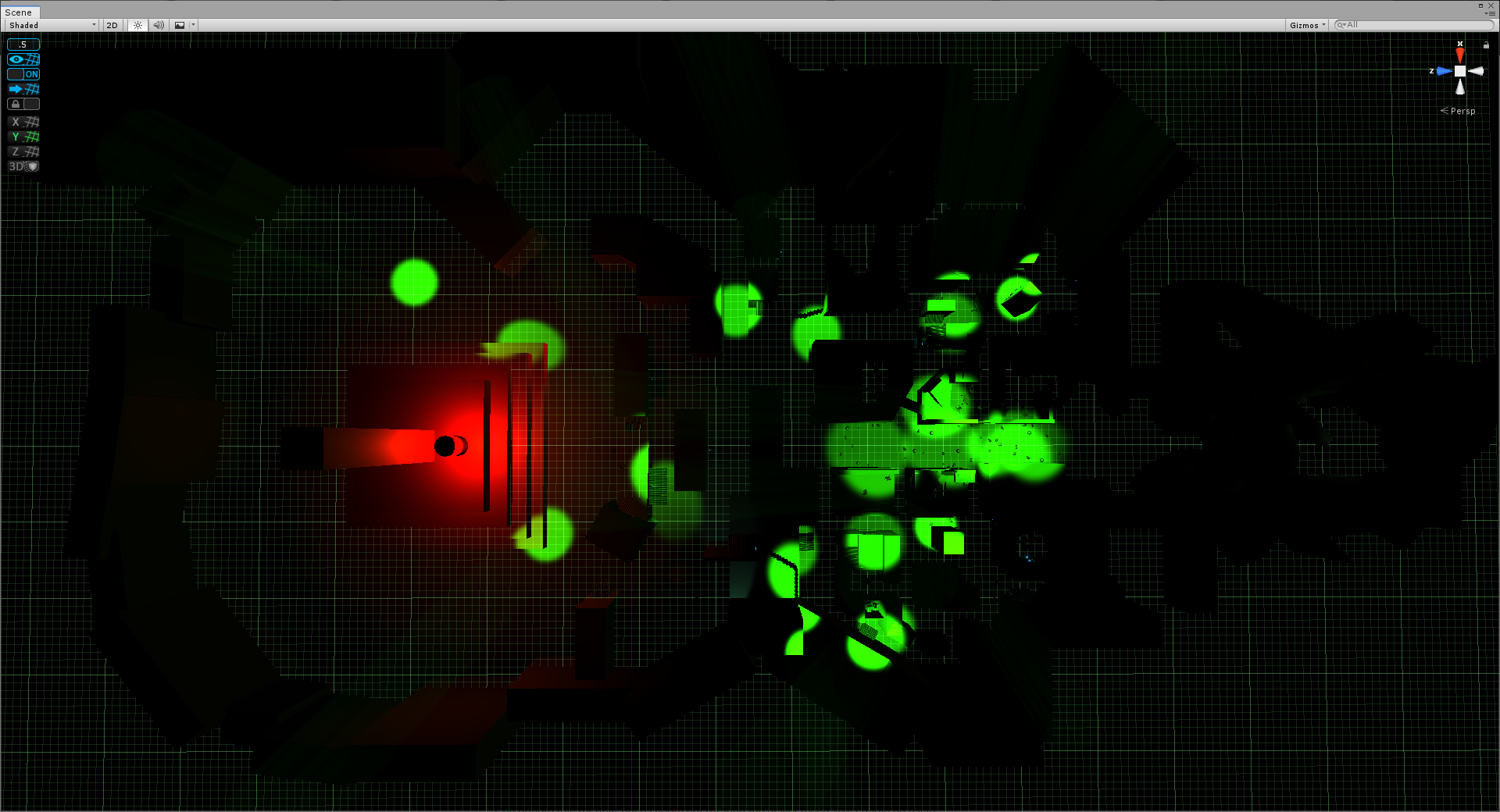
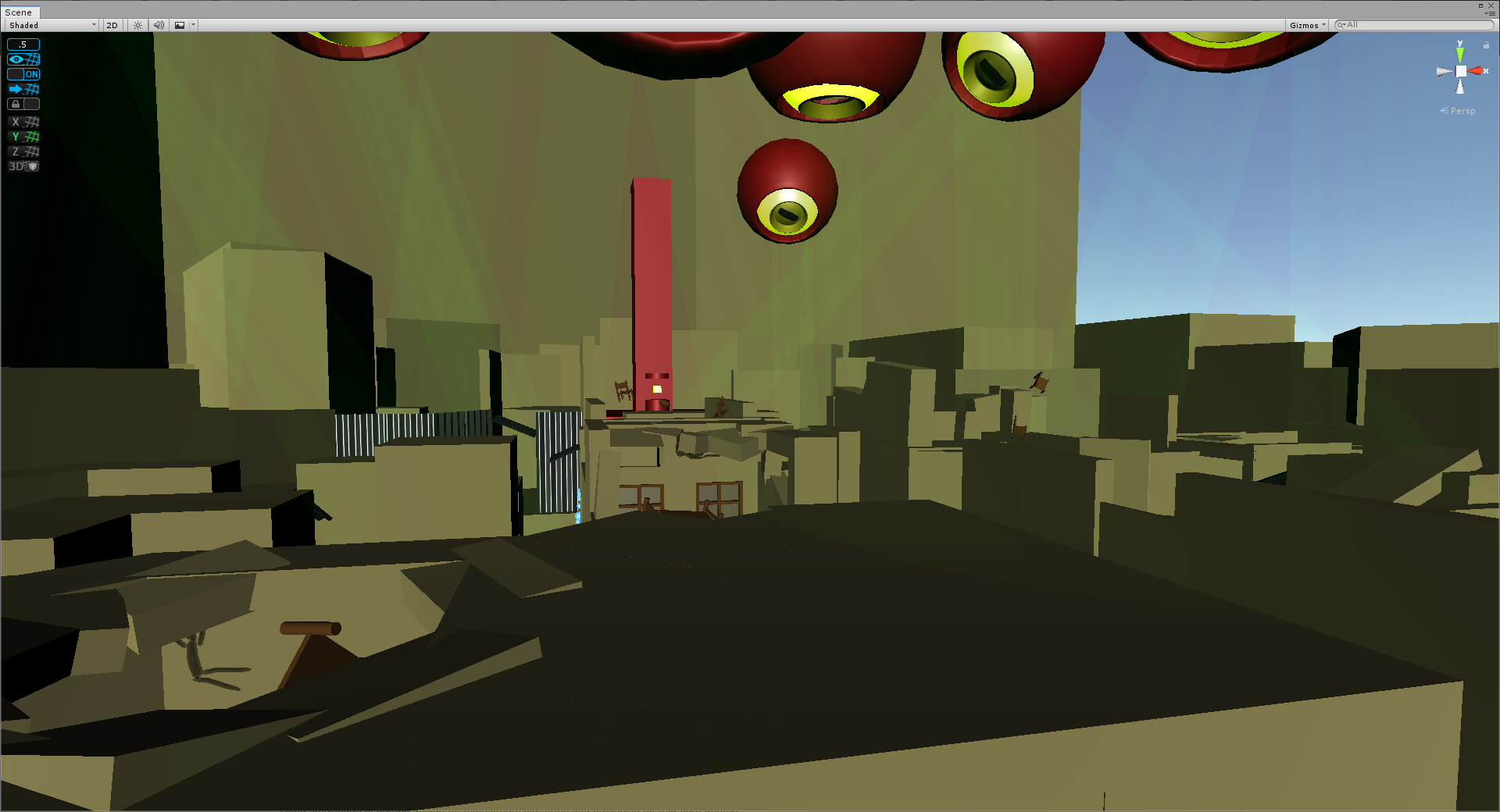
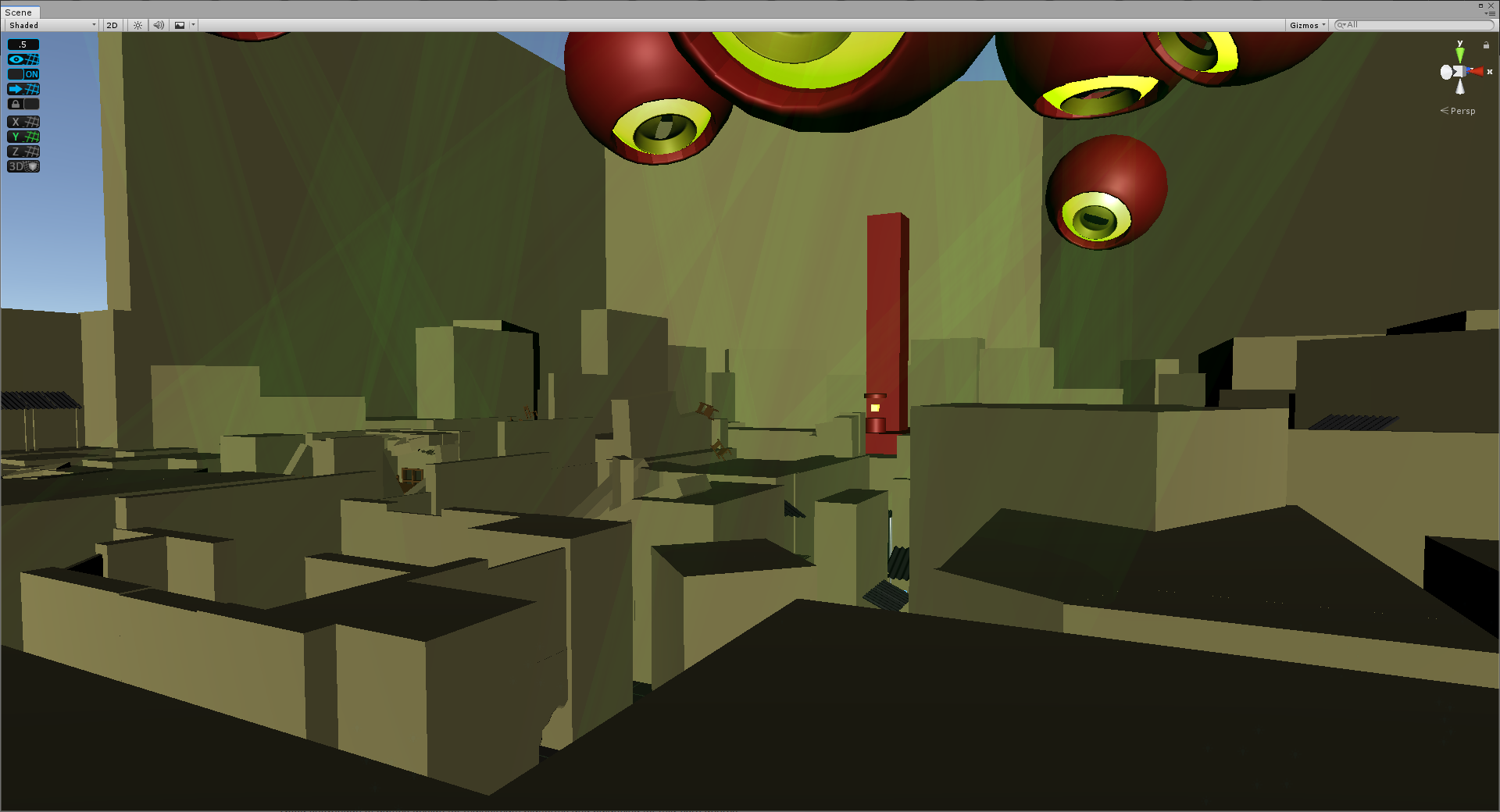
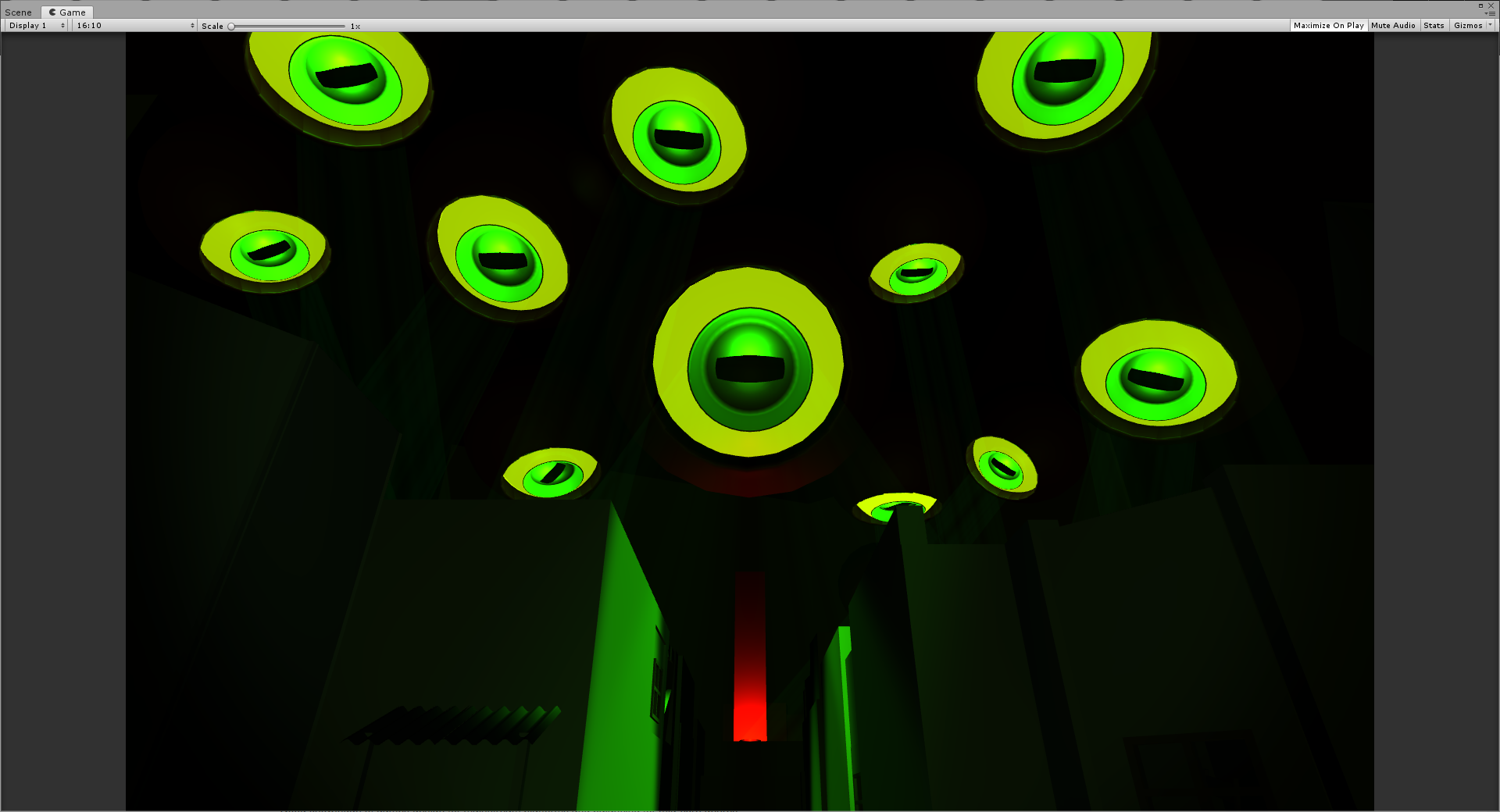
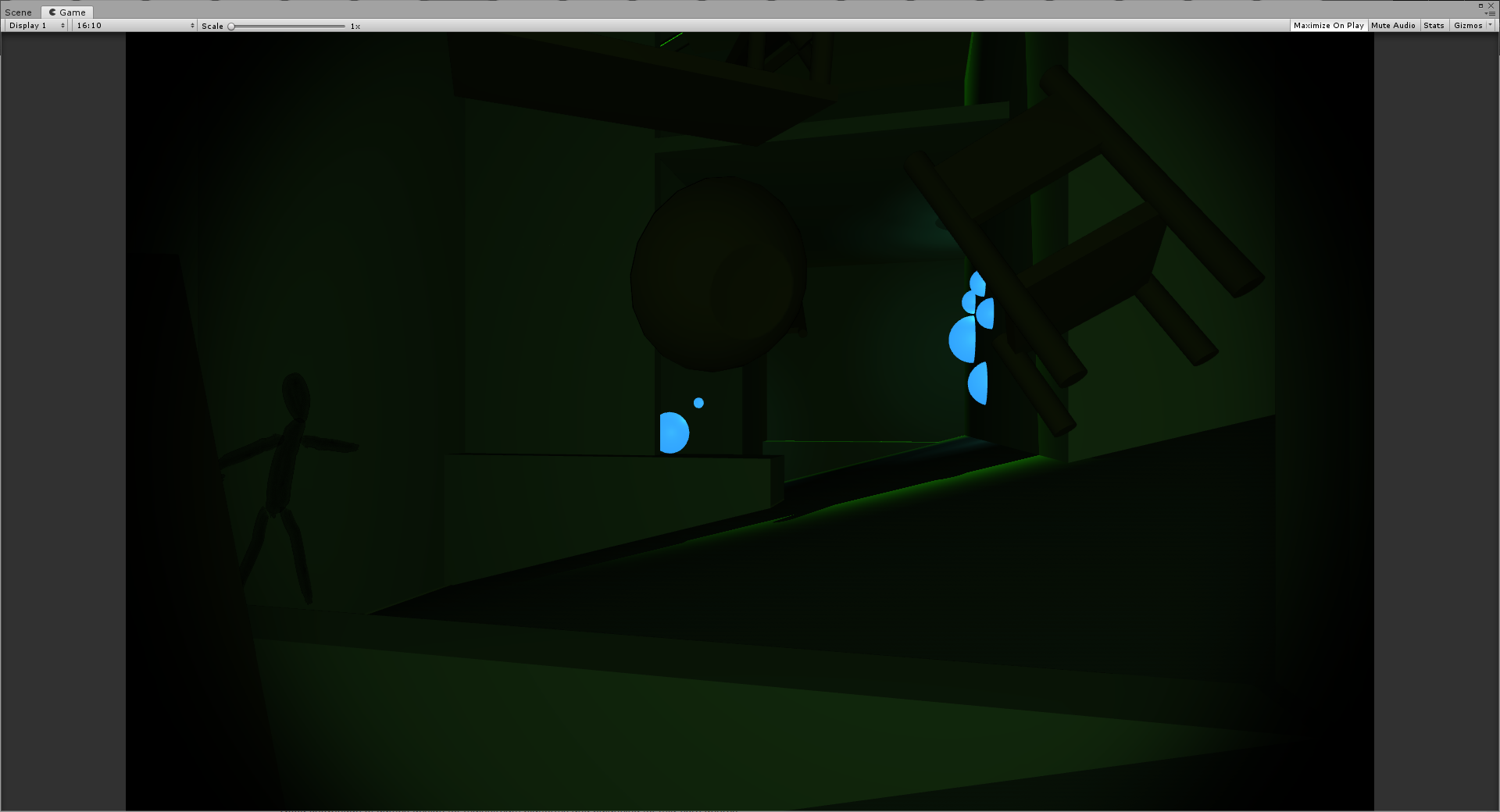
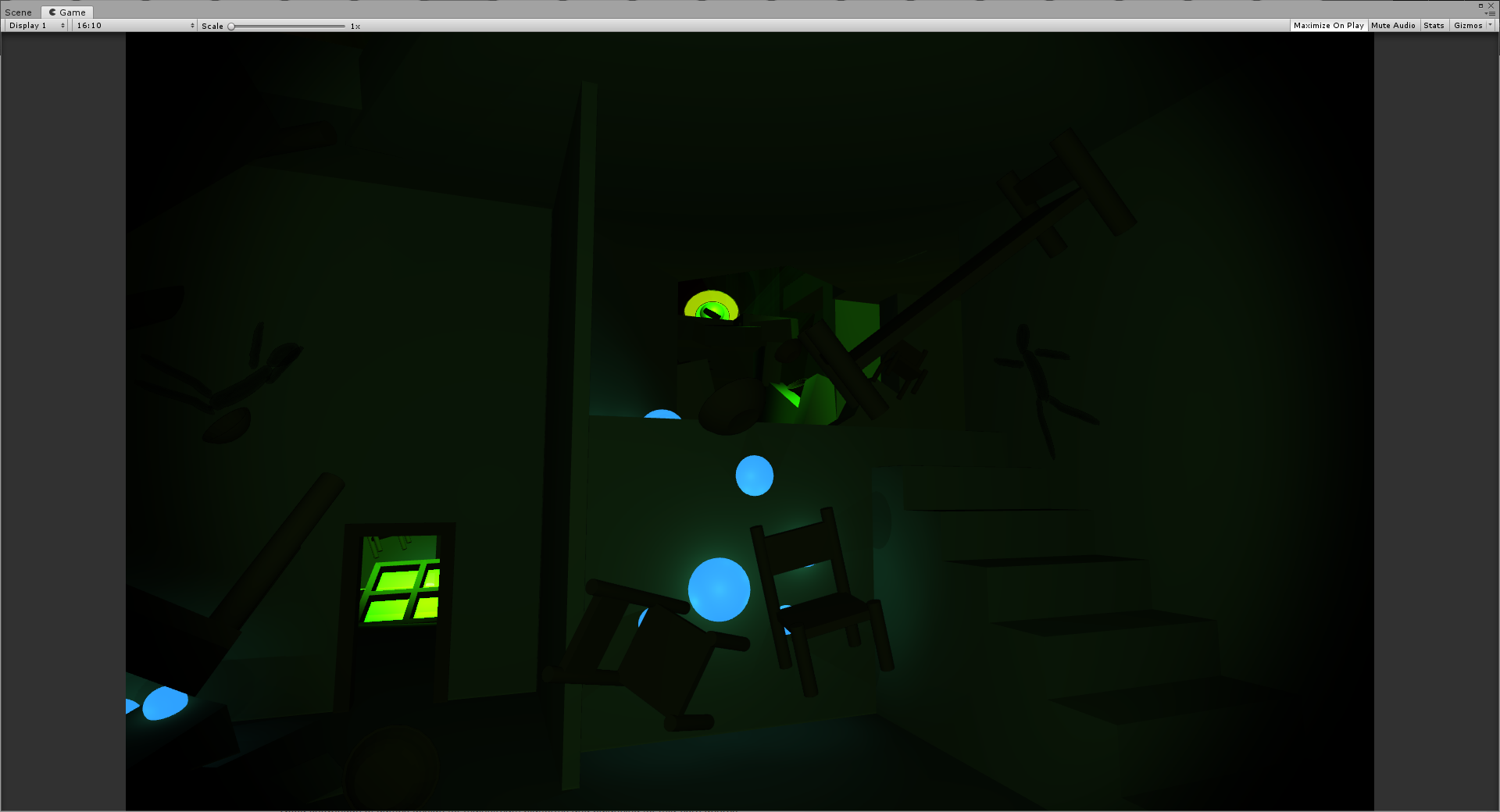
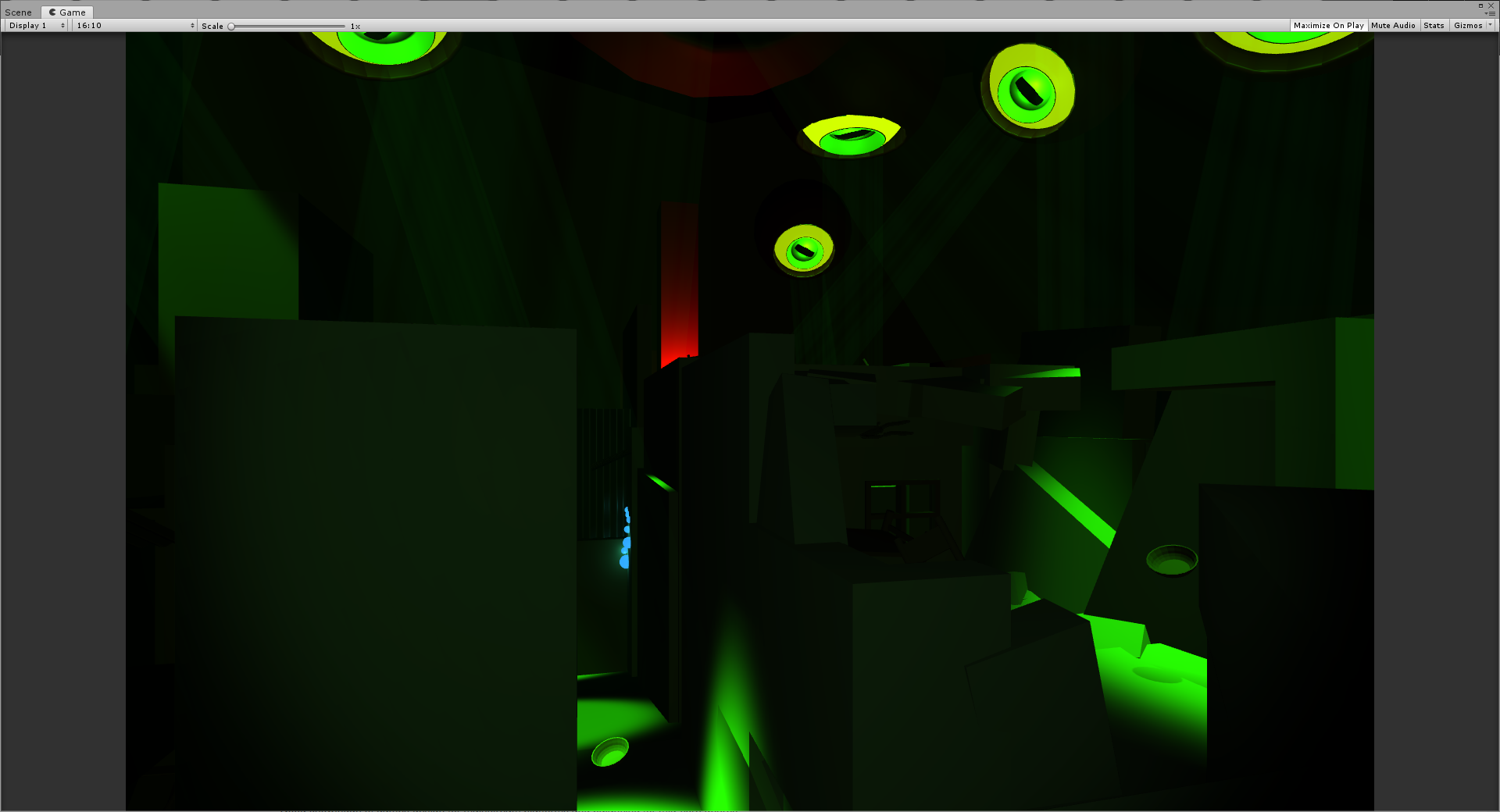
The reveal is the most important part of the level. It’s meant to entice the player, leading them out of the starting area and showing them their goal. It also teaches players that the bioluminescent orbs guide them and introduces the main antagonist.
Lastly, it sets the tone of the game, creating a sense of cosmic horror. (Horror is a completely different can of worms but my small pool of playtesters described the experience as “creepy,” “spooky,” and “atmospheric” so I’ll take that as a win.)
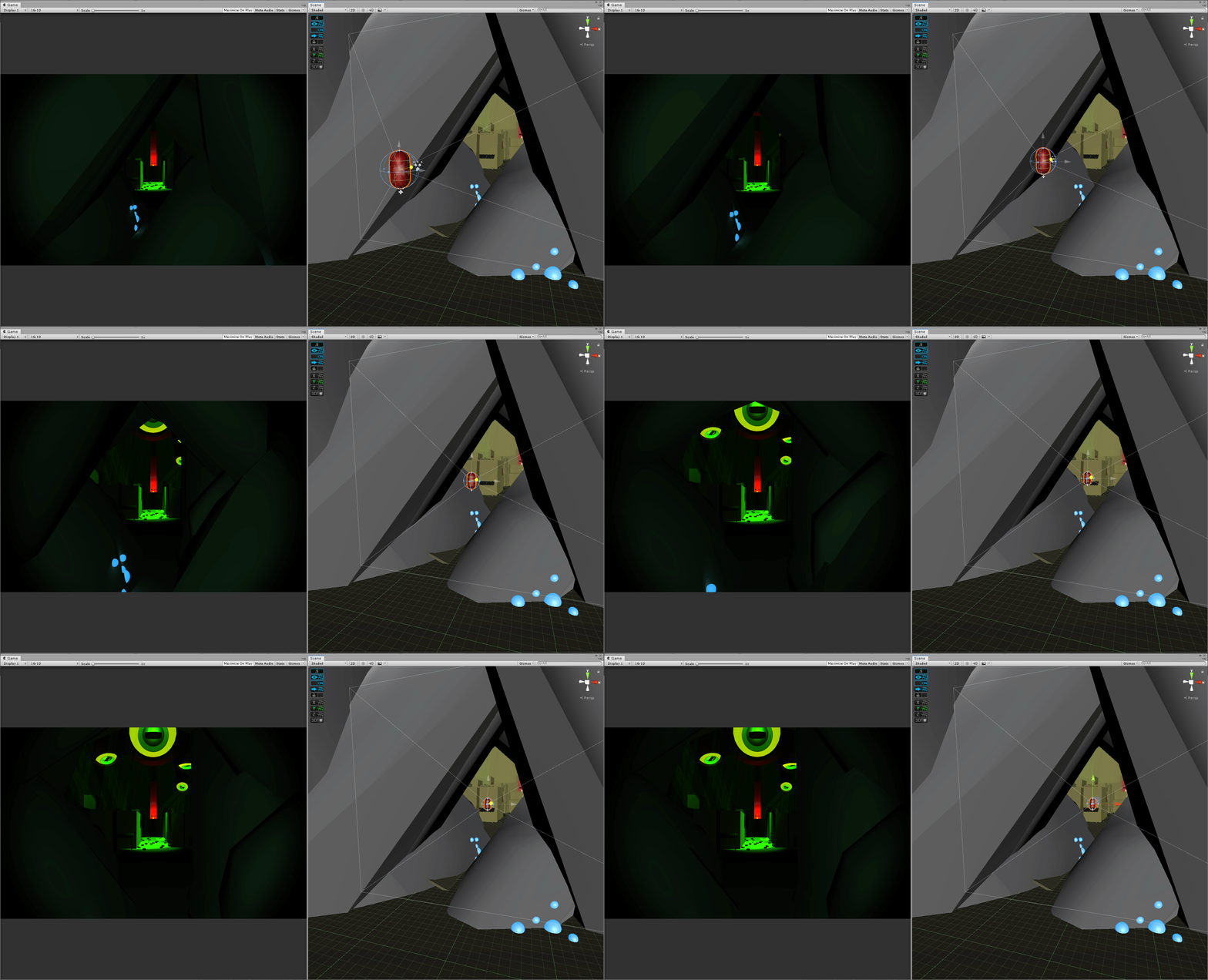
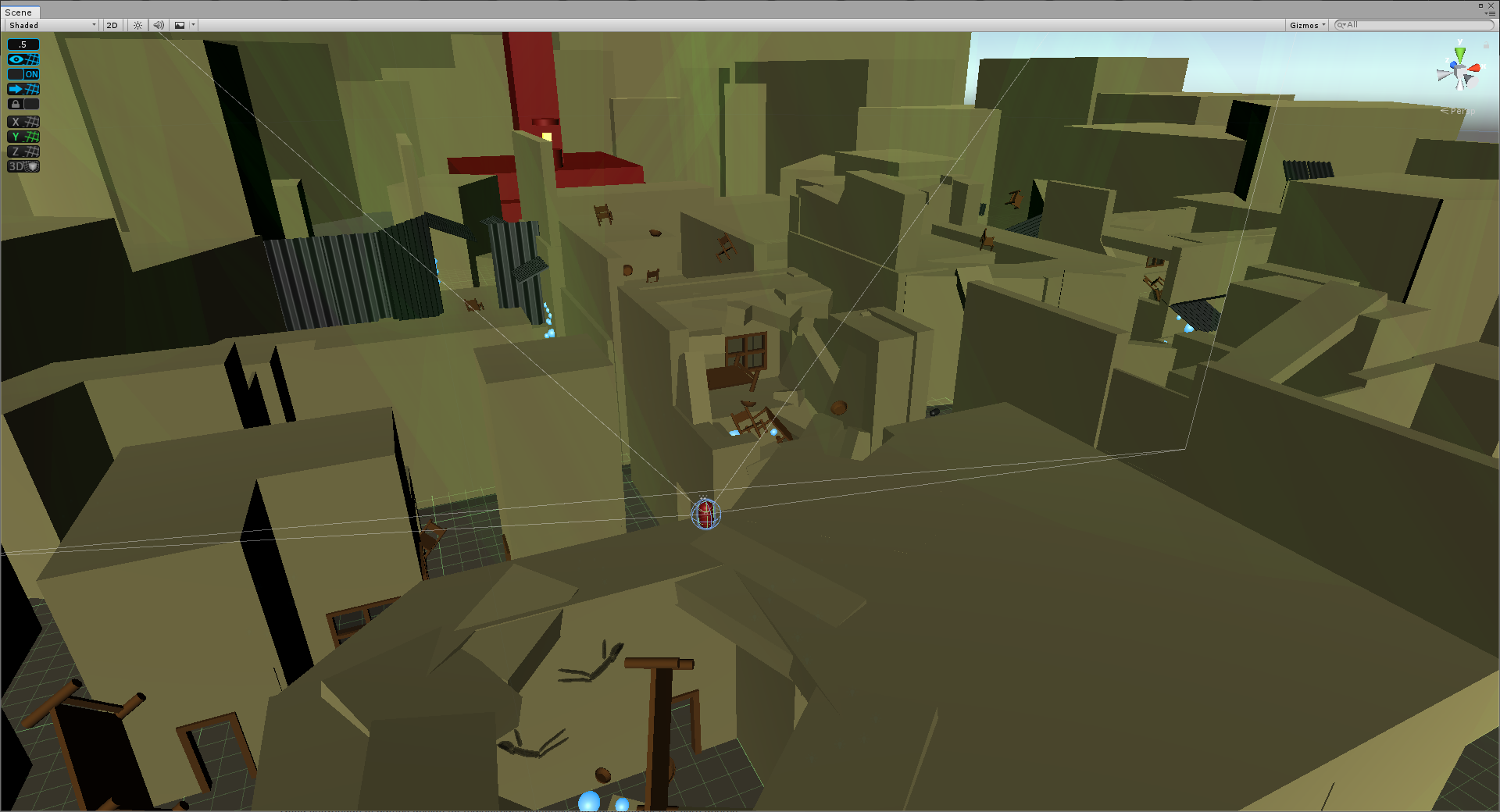
Revealing the goal to the player: a side-by-side comparison in Unity’s game preview and scene editor
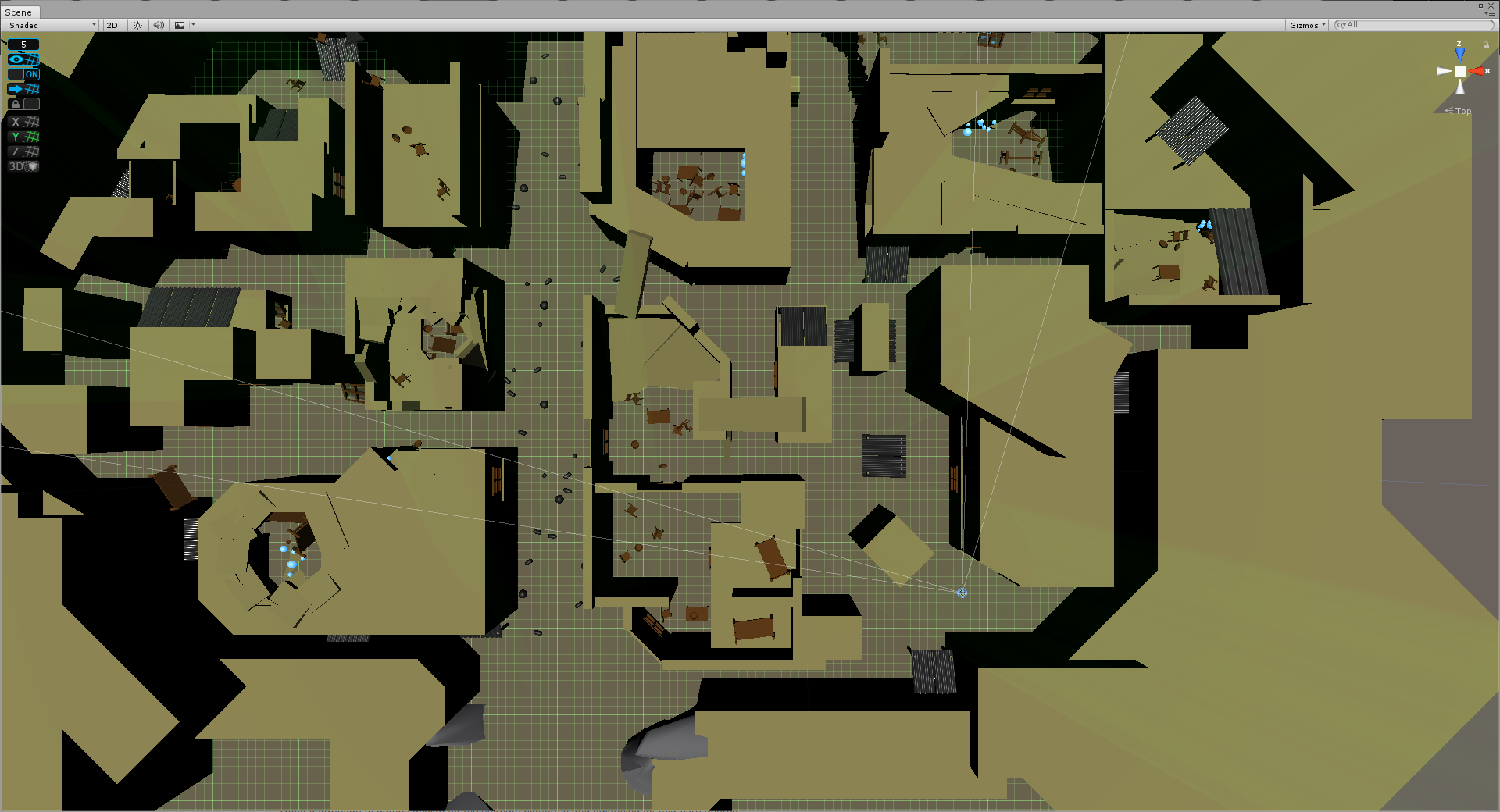
Rocks were positioned in a way that forced the player to stay low. The streets are littered with capsules resembling the bioluminescent orbs that have lost their light. If the reveal fails to warn the player and they go straight towards the goal, the player slowly begins to lose health. There are some alleys along the main street where they are allowed to change their mind.
The height difference between buildings allow for the goal to be seen throughout the level.
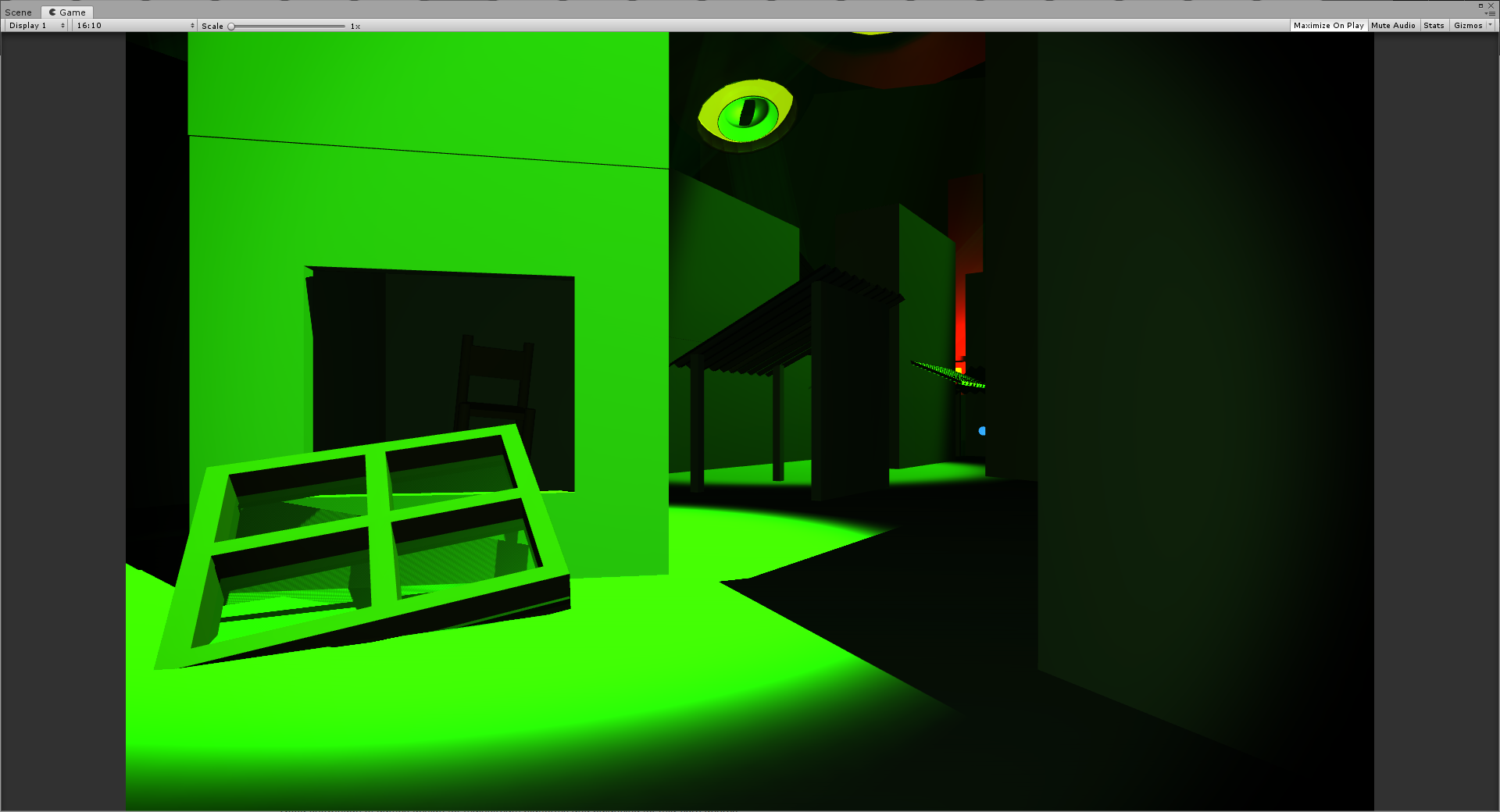
Floating furniture help lead the player through cracks in the ceiling or through walls.
In future iterations of the project, it would be interesting to see more interactive objects and “living” creatures. More emphasis should also be placed on enemy sight lines and patrol routes.